
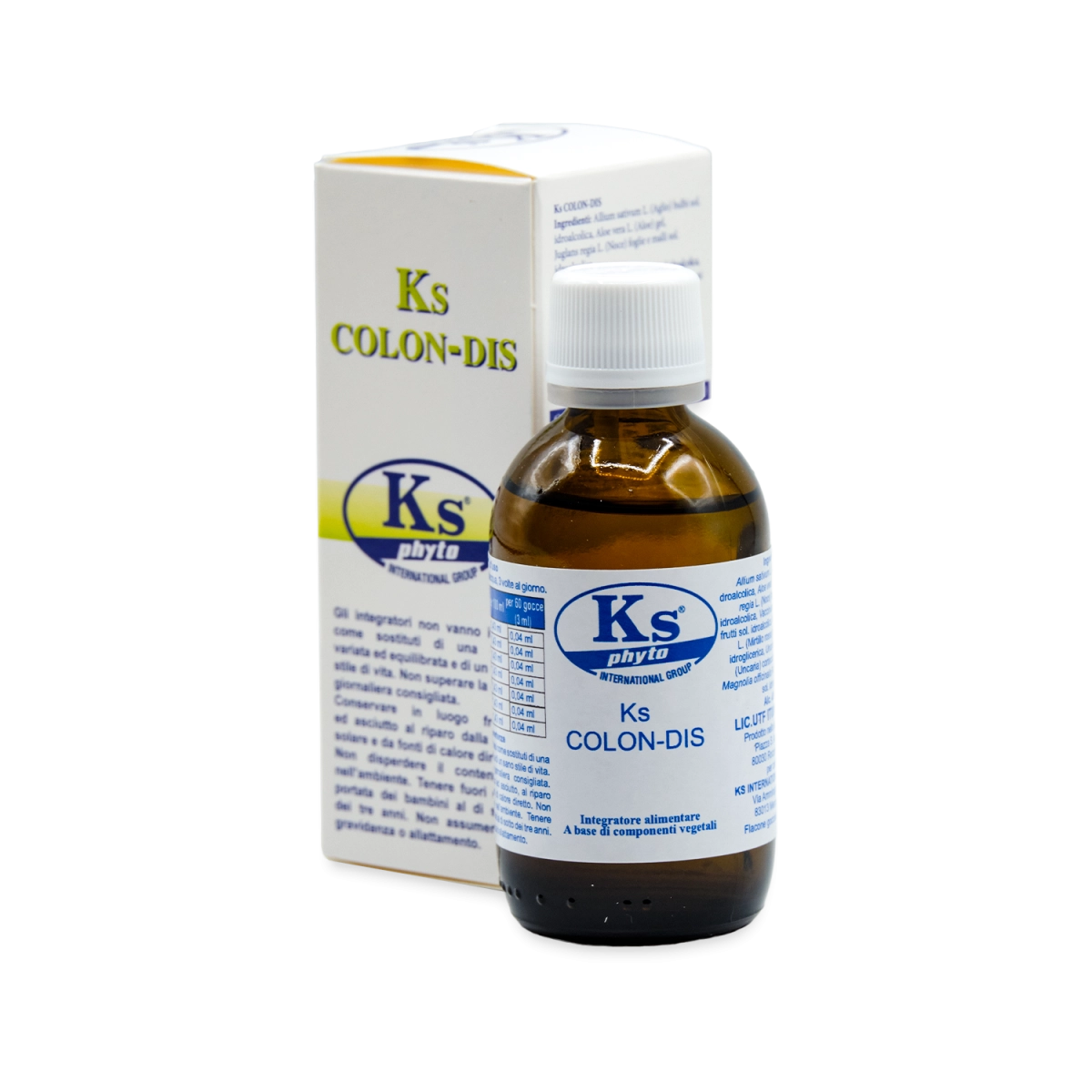
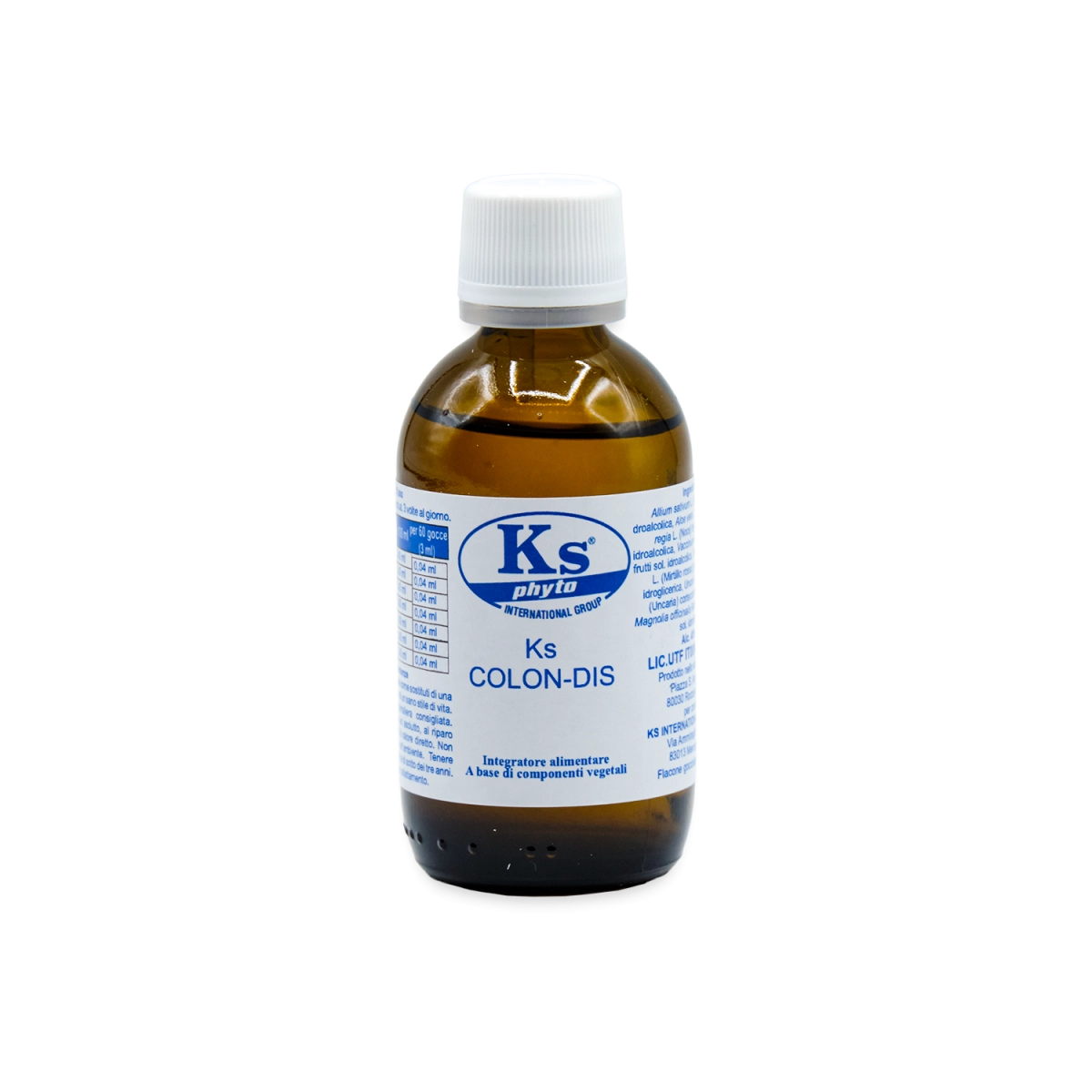
Ks Colon – Dis
Detoxifying
29,00€
Detoxifies and drains from the accumulation of toxins produced by fermentation and putrefaction resulting from intestinal dysbiosis. Therefore, it very effectively reduces the formation of gas in the stomach and intestines, eliminating the bothersome 'bloated belly' effect.


REGISTRATION n. E08 34238 - Y
The colon represents the last part of the intestine. In humans it is shorter than the small intestine and
it has a larger diameter. The muscle wall is also thicker than the small intestine’s one, organized in
longitudinal fibres ( haustra ) and transverse fibres ( tapeworms ).
While the small intestine absorbs nutrients, the colon absorbs water and mineral salts and it
provides for the synthesis of some essential fat-soluble vitamins.
The microbiota is the bacterial population colonizing the digestive system formed by probiotics,
bacteroides and pathogens. The bacteria colonizing the human intestine are numerous and belong to
genus, species and strain constant to the animal species. The predominant proportion of bacteria is
composed of bacteroides, eubacteria, fusobacteria and peptostreptococci. Probiotics (bifidobacteria
and lactobacilli) are less numerous but equally important for intestinal balance function.
The source of bacteria multiplication is the colon, from which they proliferate to arrange in other
areas. It is essential that the organism may well establish a dynamic balance with the bacteria it is
holding. The balance of the microbiota is defined as 'eubiosis', which is achieved thanks to bacterial
presences that limit and compare themselves with the other species.
Only a few genus species are pathogens (clostridium or botulinum; colibacillosis of which
Escherichia is a part). Others are non-pathogenic, but become so under certain conditions.
The last bacteria to be discovered are Firmicutes, including many genus and species and can
generate serious problems. They are capable, in fact, not only of degrading in the Ileum, the fibres
in sugars, but also of activating the Gene GPR41 that produces carriers GLUT1 and GLUT2
allowing the absorption at the ileum level of the sugars deriving from the degradation of fibres.
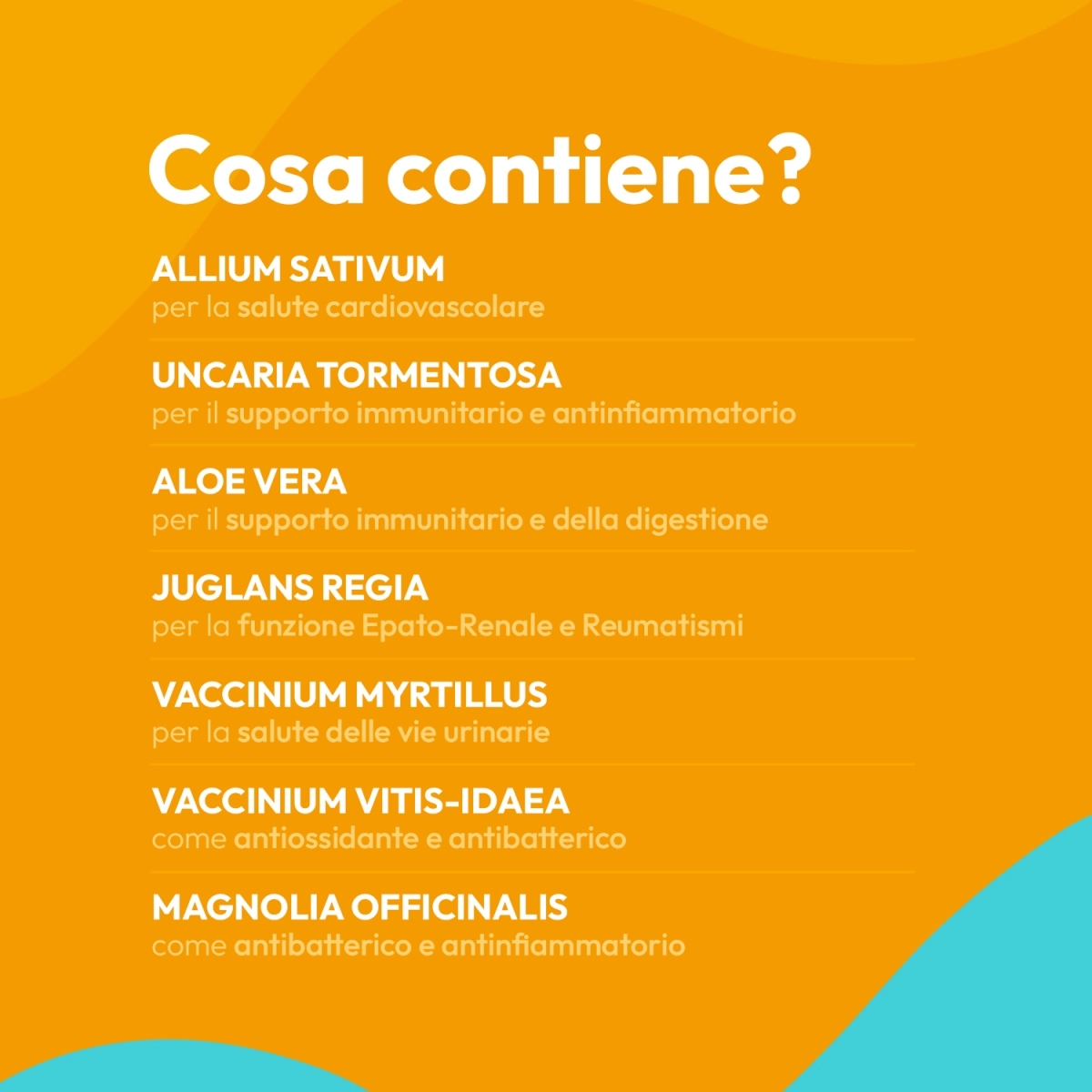
Composition
ALLIUM SATIVUM: properties for preventing hypertension, heart diseases, and antioxidant action.
UNCARIA TORMENTOSA: antioxidant, immunostimulant, anti-inflammatory, and antimutagenic action.
ALOE VERA: immunostimulant properties and laxative action.
JUNGLANS REGIA: promotes diuresis, stimulates liver function, and is useful for rheumatic conditions and rickets.
VACCINIUM MYRTILLUS: astringent properties, effective for urinary tract issues, such as cystitis or urethritis.
VACCINIUM VITIS IDAEA: antioxidant and antibacterial function.
MAGNOLIA OFFICINALIS: antibacterial, anti-inflammatory, and antifungal properties.
Indications
- Useful for colitis or post-meal bloating.
- Counteracts flatulence and diarrhea.
- Detoxifies and drains endogenous toxin accumulation.
- Reduces gas production.
- Acts as a membrane stabilizer in cases of food intolerances and persistent constipation.
- Adjunct in acne treatments, dermatitis in general, especially if seborrheic or acidic hyperhidrosis of the skin.
Dosage
- Adults: 20 drops 2 times a day
- Children: halve the dose
- The treatment should last at least 4 months.
What are phytotherapeutics used for?
Phytotherapeutics are natural products, with their active principles extracted exclusively from plants, aimed at treating or preventing various diseases. In the past, there were no synthetic drugs as we have today: healing was achieved through the use of plants and the benefits that nature provided to humans, such as cultivated and wild medicinal herbs.
How do they differ from traditional medicines?
DIETARY SUPPLEMENTS are designed to improve the functioning of the body, address nutritional deficiencies, promote overall well-being, and, most importantly, prevent certain diseases. Collectively, these products make up the broad category of dietary supplements, whose benefits have been known since ancient times. They are intended to complement regular diets and provide a concentrated source of nutrients, such as vitamins and minerals, or other substances with nutritional or physiological effects, particularly but not exclusively amino acids, essential fatty acids, fibers, and plant extracts, both single and multiple-component, in pre-dosed forms.
Their formulation and production are subject to the evaluation of a panel of experts established by the Advisory Commission of the Ministry of Health for products intended for special dietary use.
As explained by the Ministry of Health, they are useful "to optimize nutritional intake, provide nutrients of interest with protective or trophic effects, and improve metabolism and physiological functions of the body."
Do they require a medical prescription?
PHYTO-THERAPEUTICS are registered with the Ministry of Health as DIETARY SUPPLEMENTS. Therefore, they do not require a medical prescription and are considered over-the-counter products. As such, they can be disposed of with regular waste.
What is their method of administration?
Phytotherapeutics in liquid form should be diluted in a small amount of natural mineral water. A minimum dosage of 30 drops twice daily is recommended.
VITA COLON PLUS capsules should be taken 1 capsule twice a day as an initial dose for 5-10 days, and then 1 capsule daily.
The SEEDS should be mixed with yogurt or another creamy component in a quantity of 1 tablespoon per day.
The dosage should be halved for children.

SPEDIZIONI REFRIGERATE
per mantenere l’integrità e la
qualità dei nostri prodotti

SPEDIZIONI RAPIDE
entro 48 ore garantite
scopri di più

CARNI CERTIFICATE
sicurezza e qualità
al primo posto